Tuesday, October 27, 2009

U2 Live from the Rose Bowl


Official channel of U2 at YouTube has finally managed to put together the video of the Great Event - as they say, Greatest Band at Largest Stage with about 100,000 listeners. All this - U2's 360C 2009 concert - took place on Sunday evening in Los Angeles, Pasadena, at Rose Bowl Arena. It was also the first rock concert to be broadcasted live worldwide via YouTube. If you look at the video from start to the end you see other cool elements used - for example fragments of the songs here and there (like the words from actual Space Ship) that were also represented live (not recorded before).

As with the stage itself, there's probably no one other one at the horizon, performing so well in terms of light, colors, variety, show and you-name-it. Just so much above the rest, just so unique, powerful and stunning - like another world :-)

As with the phenomenon of U2, this is as amazing as their live shows have always been (also, you might like to check out ZooTV live from Sydney (1993) concert - still a very good show, even now if you look at it sixteen years later, especially, I'd recommend checking out the intro for "where the streets have no name"). But why are the band still so popular? Is it because they always introduce new songs, is it because of their well know ageless conservative style, is it their power, message or something else?.. Well I don't know the answer, but I think people around the world do know it, as most of the 2010 tour tickets are sold out AND selling the tickets, once they become available, is a matter of minutes and hours.

Anyway, I hope you enjoy the latest concert video.

Friday, October 16, 2009

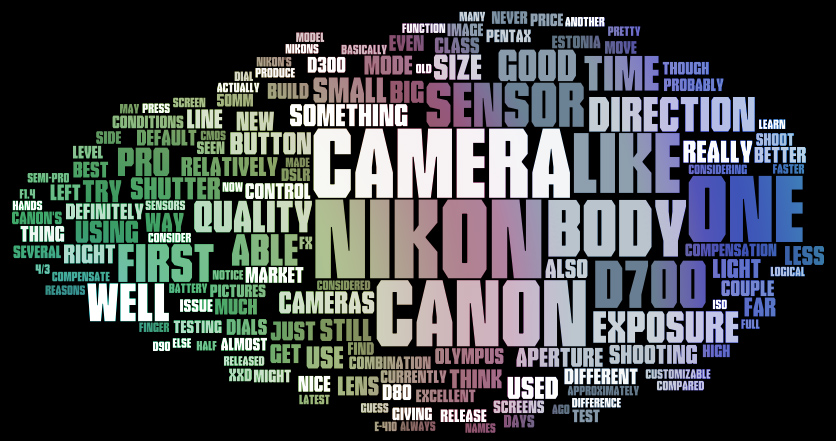
Word Cloud


What a fancy thing :-) useful, yet funny :-) (Visit wordle.net to create your own). The Word Cloud seems to tell more than a thousand words :P


Friday, September 18, 2009

Canon 40D Challenge


Shortly after the lovely mini-Olympus was sold (I still miss it :-) ), there was a chance to try the legendary XXD series semi-pro body by Canon - a 40D this time (Many thanks for Helen for making it possible :-) ). The first Canon from this line was probably Canon D30, a nice 3megapixel DSLR, first "small" sensor DSLR by Canon. The evolution after that was 10D (6mp), 20D (8mp), 30D (8mp, but lots of improvements for body), 40D (10mp), and finally 50D (15mp). A couple of weeks ago, Canon 7D was also announced. It is still arguable whether the 7D is the successor of 50D or has Canon launched entirely new line for high end half-frame cameras.


Well, one of the first things that makes Canon different from the "rest", is the size of their sensor. When Nikon, Pentax and Sony have the crop factor of 1.5 (the sensor size is approximately 23*15mm), the crop factor of Canon's cameras is 1.6, with the sensor size being around 22*14mm. So theoretically, the image quality might be a tiny bit worse, however in real life Canon has always built superior sensor, being one of the first using CMOS technology instead of CCD (as with the big competitor Nikon, the first CMOS sensors were available at 2008 (Nikon D90, D300), while the famous 10D released back in spring 2003. CMOS outperform CCD-s mainly in two areas: first, they consume less power; second, they produce less noise. The capability of the sensor was also one of the main reasons I wanted to try something from Canon as well - I hadn't had any Canon in my hands for a longer period of time so far :-)


One of the issues people often like to argue about, is "where" the XXD line of canon really stands, compared to the Nikon's cameras at the same class? It is more or less agreed that the entry level DSLR-s used to share the same, "beginner" class - So Canon's 300D, 350D, 400D, 450D and 500D were considered be direct competitors for Nikon's D50, D40, D40x and D60. The qualities characteristic for this class was all plastic body, penta-mirror viewfinder and battery lasting not so good as in their big brothers. At the time 40D was released, it was more expensive than the Nikon D80, and not as expensive as the Nikon D300. At the same time it had faster focus, faster continuous shooting, metal body and CF card over the Nikon D80, but its build quality was not up to Nikon D300 level. So to summarize this paragraph, the XXD Canons had so far being class of it's own, more or less. At the time this post is being written, 2009, the market is much more sophisticated, so we can not even narrow down the classes, as we could, so far.


Another chaos has always been with the names of the two "Big" boys. 300D, D300, 40D, D40, 60D, D60. Can you tell, which are Canon's models, which are Nikon's? Probably not if you have not been fanatic camera geek over the last couple of years. The holy web is giving several answers to us here as well, with one of the dominant reasons being the marketing departure of each company - when the model names are similar, the users get confused, so not the Canon nor the Nikon has no certain advantage of sales, when it comes down to model names.


What is really excellent with 40D, is it's high speed continuous shooting - 6,5fps (it's like a sewing-machine :-)), which makes it excellent 2nd camera for any pro shooting anything that moves fast, whether it is sports, nature or anything else. The build quality of the 40D was not as good as I'd expect for a semi-pro body, in fact the more "amateurish" Nikon D80 even felt better. The battery lasts around 1000 shots, the viewfinder is excellent, the auto-focus is fast. What else can you ask? :-) The body itself is pretty large, compared with its smaller brothers, or Nikons 70-80-90D line. Though both Nikon and Canon come from Japan, there are fundamental differences in logic - starting from in which direction the exposure compensation wheel turns, to a small little details through both the physical and electronic user interface. Take Canon 40 (50)D and Nikon 80D (90D) and use them side by side, and you learn it in seconds - so different units, yet both ate very usable.. One thing that you instantly notice about 40D, is its relatively loud shutter noise. According to the forums, the new 50D has VERY silent shutter, so hopefully this will be a a tradition - to produce silent shutters - from this point on :-)


The bottom line - it seems the Canons are not built for me :-) Is it that I have used Nikons too much, is it the physical size of XXD bodies or is it something else - I just find Nikons to be more to my taste. Should I be able to use any additional Canon's pro body in the future, I'll definitely post some comments and pictures here as well - never say never :-) .. All the pictures seen here are shot with 50mm F1.8 prime or 17-40mm F4 L.

Olympus E-410 + 14-42mm challenge :)


:-) I guess summer trends are not so sitting-in-front-of-computer with blogging-tweeting-crawling through the internet in Northern Countries :-) The Fall sounds much better :-) Lazy afternoons, short days, endless nights with favorite music - why not to write an article or two time by time when there's even not light enough to do something outside? :-)

(Click to the images for bigger size, they're mainly 800-900 pixels wide/high, so you can see some more details).


Short after the D700 test I found myself thinking about the "new toy" for summer - I never had tried any Oly(mpus) for a longer period, so this time the roads crossed with a tiny (okay, todays small "micro" 4/3-s are smaller) olympus E-410. How did it feel, in a word? Good! For its price :P I picked up one used paying approximately $200 for it (14-42 was included).


First emotion having the small oly in my (small) hands - it's not big at all! Compared with the (relatively) big D700, both in therms of size, weight and price :P (I think the price difference is about 10 times, whether it is new or used unit.. the weight difference is perhaps not so giant, perhaps Nikon D700 weighting approximately tow E410-s).


Besides tons of other differences between these units, one of the most obvious difference is the sensor size - this is also probably the main reason I wanted to try the 4/3 system - I wanted to know HOW good/bad the sensor actually is, in different (light) conditions. Just for reference, E-410 was released somewhere at spring 2007 - this is more than 2 years ago: today the latest 4/3 cameras (E-30, Panasonic GF/GH-s) have far better sensors than the one used at 410). Olympus is widely known for its high quality optics as well, so whenever someone has been loyal to Olympus brand in the previous decades, the bunch of lens collected at the photo shelf might be well worth considering continuing the adventure with having a nice olympus body in addition to the old traditional film one.


The build quality is relatively good. No plastic nigs-nags, the small body feels solid and thick. The lack of solid handgrip can at a glance be considered as disadvantage, however this is something one can get used to, relatively quickly. The whole E-410 concept can definitely be considered as something very compact - add the new "pancake" (some newer 420-s ship with 25mm pancake lens) lens here, and there it may fit some pockets! :-) Not a shirt-pocket, though.


One thing that you might instantly notice, after downloading the files to your computer and reviewing them after that, is that the images are pretty much "cube" like - this is due to the 4:3 aspect ration, which is a step closer to a "cube" than traditional 3:2 aspect ratio image. I guess coming from 4:3 the traditional 3:2 may look like a panorama? ..


I'd say the capability of the sensor was exactly near to what I was expecting. Almost as good in terms of sensitivity, as the bigger old CCD sensors at Nikon D70/D80, but not having as much dynamic range, which is also very logical because of the small size of the 4/3 sensor. So the quality is better than the best compact in the market, but far from the quality of latest entry-level DSLRs (Nikon D5000, Canon 500D, etc). To get the most out of the camera, of course it is a good idea to shoot RAW - you just get more color data this way, so less blown highlights and burned blacks.

Any downsides as well? Yes. The LCD screen is not the best out there. Even the old 2.5" 230,000 dots (Canon 5D, Nikon D80) screens are better. I'm not sure about the resolution with 410, but the viewing angles are bad, and the screen contrast is very, very bad. In it's class (2,5 low resolution LCD-s), one of the best LCD screens I've seen is at Pentax K10D (I guess samsung has developed it - it really outperforms the competitors screens - good viewing angles, good colors and contrast, also very sharp, though has the same 230k dots). If you have seen the new 3,0+ 920k screens, this 410-s screen is definitely not something you'd like to dream about.. The speed of the camera was not great as well. Relatively slow autofocus, file recording time and speed of use in general. But again, when you look at the price, the whole unit is very very good.



Using the camera more than 2 months I learned what I always learn with almost any camera - it really does not matter if you have the latest pro body or the cheapest entry level body - when you need to do a picture, you get it with your current camera, IF you know what to do - so understand the capabilities of the camera, conditions of light, shooting object, desired result, etc :-) Maybe still ONE thing I never got used to - it is the same lack of handgrip, which made the camera somewhat uncomfortable to use..

All the photos seen here were shot with the "kit" lens, Zuiko 14-42mm F3.5-5.6 :-) Obviously, the DOF and other image parameters is not near where it should be with some of the (portrait) photos, but overall - the kit lens performed pretty well :)

Tuesday, May 19, 2009

Nikon D700 + 50mm F1.4G challenge


First of all, many thanks and kudos to
Nikon Estonia for providing the D700 for testing purposes.


I've been with digital cameras since 2004, with DSLR since 2005, but so far strictly with amateur cameras only, so I think it is time to move on to (semi-) pro body, and Nikon D700 is definitely something you'd like to consider being in a situation like that.


As with me, decision to go with pro body is directly related with the chance to try D700 - I was actually considering to try D90 first, but as this model was unavailable for testing, I got the D700.. and I'm more or less sure most of us would like D700 over the D90 for several reasons, starting with the blow away sensor and excellent build quality.


So I took a couple of days off for some serious D700 shooting at different locations and conditions and I'd like to share a couple of thoughts (and pictures) with you. It is just my personal opinion and thoughts about using the camera, if you are looking for charts, comparisons and several test shots, you should consider visiting dpreview.com or similar site.


I came from Nikon D80, so the fist impression was the camera is really big and heavy. Well, there's still room to Canon 1D or Nikon D3 and this actually fine by me as I do not have the largest hands on earth. Choosing between comfortable vertical shooting with 7+ fps together with heavier camera and 5fps with no battery grip at the other side I really prefer the second option, and here I'm in a party still hooraying for the D700 coming to the market after sooooo successful Canon 5D (a full frame (FX) camera with relatively small body).


The 50mm prime (best 50mm currently available form nikon, the silent internal focusing (AF-S) F1.4G) is with no doubt one of the best options to test the camera with non-zooming lens giving work to your legs and creativity and razor sharp glass taking care of the image quality covering the whole FX sensor area from center to corner.


Another nice combination here is the F1.4 at high ISO values giving you the most flexible combination currently on the market - almost usable to take pictures at any light (dark) condition till your eye can differentiate the subjects you shoot. This means you can shoot at very poor light conditions with not being forced to use flash. The combination of using ISO 12,800 + F1.4 as an aperture is in fact so good, that even in dim light you see the shutter speeds going 1/100 or faster. So the superb sensor is definitely one of  the major USPs (unique selling points) for the D700, and considering its build quality and almost endless possibilities to set up the camera in the way you like, it is hard to say no to the package as sweet as that.


There are currently only a couple of FX cameras on the market able to compete against the ISO performance of the D700 - it's big brother D3, Canon 5D Mk2 and Canon 1Ds Mk3 (Sony A900 is full frame (FX) as well, but the sensor is not quite up to the level of D700 / 5DMk2).


---------

Now about the things I'd like to be improved a bit with regarding to using and customizing the using of the camera.

There's one major issue I'd like to point out with D700 and this is probably the most annoying thing I found about this camera. It's about how I'd like the exposure compensation button to work and about that I was not able to achieve the desired result. While I'm about ninety percent sure I went through every menu corner to find a solution, I wouldn't burn the bridge to learn how to really do it. Also, the solution could be fixed with simple firmware update. Now, down to the problem.


By default, in P mode, the exposure compensation is made using the first control dial (located just below the shutter release button) and if you turn it left, it overcompensates and if you turn it to right direction, it undercompensates the exposure. At the same time, the front control dial just offers you different combination of exposure and aperture values if you are not happy with the default ones offered by camera (the P comes to P* when you do it).


First of all, I'd like the dials to be switched for the following reason. If I have my finger on the shutter release button and I have a quick moving object I'd like to capture quickly with compensating the default exposure, I will not be able to do that because I need to move the finger away from the shutter release button, compensate the exposure accordingly, move the finger back, half press for the focus and exposure and then full press to get the picture.


While I understand the P mode is not the mode the camera might be aimed to shoot in, I still think a way like this is way too slow. Fortunately, Nikon has included the "switch the control dials" at the menu, so the solution is there - I can half press the shutter release button and compensate the exposure comfortably. Now the other half of the issue - I'd like the default direction to be changed. Again, this can be done, without switching the roles of the dials first - you can easily use the front wheel to compensate from left to right (from - to +) as opposed to right to left (from - to +) which is how Nikon engineers seem to think.


What I could NOT change, was both to switch the roles and have the directions right. You can do one or the other thing, but not both. This is what I'd like to be able to do, and before I go with D700 (or D300, basically the same body and functions/logic), I'll consult about it with some pro Nikon user.


And, another issue with the direction of how any of the control button works, is the way it handles aperture in A mode. It is logical that you move from left to right having left side as smallest aperture (16 with 1.4G) and to the right direction as the widest possible aperture (F1.4 with 50mm F1.4G). But it works vice versa. So if you think you made some success with switching the direction, it is not true about everything.

The bottom line with this issue - it is nice to be able to configure the control dials - but there's lots of room for this area of the customization. Every dial should be customizable for its function and direction in any more, including independently being able to fix the aperture direction and exposure compensation direction.

I was not able to test the dials in S mode, but the direction should be customizable here as well - while I find the directions mentioned above very logic, many of you may find this not logical direction at all - this is why it ALL has to be VERY customizable.

One more minor notice about giving custom functions to buttons. The AE lock can not be addressed a custom function. It would be nice to be able to do it, as it is the closest button to thumb, and the default function (basically AF in MF mode) is not what I'd like to use too often.


----------

As with the choice which semi-pro DSLR to choose, it is not that easy to decide about it here, in Estonia. Nikon Estonia was the only company providing the camera for testing and how can I buy one without previously testing one? Overall (official reseller of Canon) kindly allows to try the camera at their office OR to rent the pro body for several days with refunding you both the rental money and guaranty money. It is basically the same with Pentax (though pentax does not currently produce any (semi-)pro body). I'm still waiting for the reply from Olympus (contacted them more than a week ago already). So it seems most of the resellers are eager to sell what they have, but they're not doing it in the most flexible way they could.

So again, thanks for Nikon Estonia, I think being able to try the pro body for some days is a serious plus to consider buying their camera :-)

Thursday, December 18, 2008

Monday, December 08, 2008

Which DSLR camera to choose?


I often hear the question "which DSLR to choose", so I decided to put together a brief which hopefully brings you a step closer to narrow down the models you'd like to choose from. Five years ago the choice was not that tough (there were times less models), and I'm sure in five years the choice will be almost impossible (when there are about 30-40 models to choose from, today, I believe there will be about one hundred at the year 2013). I'm also follow digital camera news/previews/reviews/articles fantically, so for me the current situation in DSLR market is really interesting :-) I'm also a DSLR user since the beginning of 2005, with experience of using Pentax, Canon and Nikon amateur DSLRs.

It's not that easy to structure the topic, so I decided to start with history, and then just walk through the major issues you're most probably about to meet, when deciding about which one to choose. Be sure you check out different sourced from the web before buying a camera, as understandings and point of views here might differ night and day.

1. History
2. Name mess
3. Sensors
3.1 Focal Length Multiplier
4. Features and Build quality
5. Top manufacturers.
6. Which media?
7. Megapixels
8. Conclusion

This article is mainly for the people considering to purchase their first DSLR (Digital Single Lens Reflex Camera). Ever since the first DSLR-s become available, the question has always been out there. Following is just my opinion which may be obsolete in a certain period of time :) *** All images used here are subject of copyright of their respective owners ***

First, let's take a look at the history - this way we comprehend the current day better.

1995 - Kodak introduces the first digital SLR camera called DCS460.


Based on Nikon N90 body, sensor manufactored by Kodak. Price? $35,000. Consider the inflation, and you see it cost a price of a nice luxury car. Example picture.

1998 - Kodak is releasing DCS560, which is based on Canon 1 body this time.


Despite three years of developing, the sensor is ultimately a brother of the DCS460 - a 6 megapixel CCd, with ISO 80/200 sensitivity and 1fps frame rate. That was ten years ago. The body, of course, was a a real pro tool, so the combination of these two cameras was sold new around $30,000. Both 460 and the 560 had the focal lenght multiplier 1.3, which is a tiny bit smaller than the full frame. Here's one nice review of this camera still available.

Kodak also announced another 2.0 megapixel DSLR at 1998, with 1.6x (typical Canon's DX format digital body multiplier today) focal multiplier, housed at Canon 1N pro body. The major advantage of 2 megapixel sensor was sensitivity up to ISO1600, also impressive 3.5FPS frame rate. Suggested retails price $15,000 :-) Phil Askey (founder of dpreview.com) has also written a small preview about this camera - here.

1999 - It seems Kodak is still not sure about is Canon better or Nikon. Not much of an improvement over the DCS520, Kodak announces DCS620 - this time based on Nikon F5 body. Pictures are somewhat cleaner in terms of noise, however the megapixels and ISO levels (also the fps) are the same.

In June, Nikon releases its first DSLR, Nikon D1.


Almost three times cheaper than Kodak 620, with more megapixels and the same pro body - really tough answer to Kodak. The body design has basically remained the until today, including D1H, D2, D2H, D2x, D3 and finally, D3X. The D1 had 2.7 megapixels, up to ISO 3200 sensitivity CCD sensor, and a new standard in terms of speed - 4.5 frames per second.

2000 introduced first "home grown" Canon - the impressive 3 megapixels Canon D30. Priced at $3000, it was becoming more affordable to serious amateurs and semi-pros. Canon also has the CMOS sensor as opposed to CCD, which means lower noise and lower power consumption. D30 was based on EOS-1N body, full metal chassis and excellent build quality. Later Canons ike 10D, 20D, 30D, 40D and 50D were based on the same body. This is Canon D30:


Don't let the name fool you, Canon also has the 30D in this line of DSLR-s, announced probably around 2006, a nice 8 megapixel semi-pro digital camera.

So we can say the year 2000 was a breakthrough year for digital SLR cameras. A year or two later Olympus, Sigma, Minolta also announced their first DSLR-s. And recent years, you also can see Samsung (basically pentax with Samsung's label), Sony (former Minolta), Sigma (with interesting Foveon sensor) and Panasonic (successful newcomer) cameras at the shelves of camera stores.


The name mess.

Also as with the names, Canon and Nikon have really poor marketing divisions, all they can invent are D50 and 50D, D40 and 40D, D30 and 30D, 10D, 20D D60, D70, D80, D90, D100, D200, D300, D1 and 1D, D2, D3, 1Ds, 1DMkIII, 5D, 7D.. now name which is canon which is nikon unless you have followed the production line for years. Tough competition? This all is mixed with ***D, **D, D*** and D** lines - Nikon prosumer line is D70, D80 and D90, while two-digit line marked at canon bodies means semi-pro cameras: 10D, 20D, 30D, 40D, 50D. So it is opposite with ***D - canon consumer DSLR-s are 300D, 350D, 400D, 450D.. while Nikon's semi-pro line is D100, D200, D300. Go figure! :P The market of DSLR-s is actually really narrow with 3-4 segments in it. New trends (like Canon 1000D and Pentax KM) show there's room for more segments (1000D and KM are ultra simple and budget DSLR-s).

So ultimately, when you go out shopping and get buzzed with 40D-s and D40-s, this is the way two big boys want you to be buzzed :-) Get used to to it. As you can see, Canon has also fooled themselves, by releasing both D30 and 30D. Don't the D30 look like a Nikon's product? I'll not be surprised when Nikon announces a "baby" Nikon D30 somewhere 2009/2010 (to meet the new ultra-budget DSLR segment opened by Canon and Pentax). As with the names in general, combination of one (or two) letter and one or two numbers seems to be choice of all camera manufacturers on planet Earth. Contax N. Sigma DP1. Sony R1. Fujifilm S5. Canon 50D. Nikon 3D. Minolta 5D. Canon 5D. Minolta 7D. Nikon D40x. Canon S80. Ricoh R1. Leica M8. So 1 is a definite choice #1. Number one, first, best. And D is the ultimate choice from letters - D = Digital.

With regards to continue with history, 2000 was a breakthrough year. Another player, Fujifilm, introduced their first DSLR camera - Fuji S1 Pro. Based on Nikon D100 (D100 was based on Nikon F5), Fujifilm has their own Super-CCD sensor built in the Nikon's superior body. The advantage of Super CCD was their better dynamic range (CCD had the weakest, CMOS somewhere between them), however the interpolated resolution (R,G,B layers at certain megapixels) was not up to the level of native CCD/CMOS sensors. So when fujifilm announced 6,1megapixel DSLR, it was actually 3 megapixel sensor with Red and Green layers in it. The marketing division, of course, advised to announe this as 6 (3+3=6), so this is what you read later from advertisements. In general, Super CCD-s are nice techology, I suggest to read about this more ;-)

Sensors.

The sensors are pretty specific items to write books about their (dis)advantages and differences, but in a word Canon CMOS are considered the best these days. Sony is the 2nd largest (if not #1 already) a long time supplier for Nikon and Pentax (the 6.1mpix CCD sony sensor was probably the most produced DX sensor ever). Now it seems Nikon is picking up (D3 and D700's sensor is supposed to developed by Nikon), and there are some other sensor manufactures like Fuji (Super CCD), Sigma (foveon), Olympus/Panasonic (probably use shared (LMOS) sensors). This is it, generally speaking about FX/DX sensors (half frame and full frame). As sensors are one of the main players when talking about DSLR-s, we'll meet them again later :-)


Focal Length Multiplier (FLM)

The term "focal multiplier" is used when the sensor of digital SLR is different to traditional full frame 35mm camera. Most used sensor size of DSLR-s these days is about 24x16 millimeters, which is approximately 1/3 of the full frame (36x24mm) in terms of physical area covered. So the term "half frame" is not so correct here, otherwise it would be 24x18mm, which is 432 square millimeters, which is exactly half of the full frame area. To retain the 3:2 aspect ration, the measures of "half-frame" sensor is about 24x16. This gives us focal length multiplier one point five - 1.5. This means that when we have 24mm lens for traditional 35mm full frame camera, it gives us focal lenght 36mm for DX (half frame) camera, with focal multiplier 1.5.

Typical models with 1.5 focal multiplier sensors are (were) all pentax DSLR-s, all nikons except D3(x) and D700, all sonys except Alpha 900.. also fujifilm S* series and probably many more. Note that Canon entry (and semi-pro) level DSLR-s have the FM of 1.6, which means their sensors are slightly smaller than the ones with 1.5. So most of the canon DSLR-s would have the 24mm lens working as 38,4mm lens.

4:3 is a different story. Olympus and Panasonic has gone with their own way, with having physically even smaller sensors than traditional 1.5FM sensors. Typical sensor size of olympus or panasonic DSLR is approx. 17x13mm which is considerably smaller than 24x16. This gives us FM of 2.0 so the 24mm lens would work 48mm in front of your Oly/Pana camera. You can easily follow this by reading the numbers from your lens, Olympus "kit" lens usually start with numbers "14", so double it, and you get 28mm - traditional wide angle.

Another FLM sometimes met is 1.3 - this is used by Canon 1D non full frame cameras, like Canon 1D Mark2, 1D mark3. The physical sensor size is about 29x19mm, so 24mm lens would work as 31mm lens in front of your Canon 1D. The first Kodak's also had the same FLM-s, so who knows, maybe this FLM comes from there (remember Kodak built one of their first DSLR-s using Canon EOS-1 body). .. There may be other FLM-s available, but these were the most common ones.


Features and Build quality.

Why it is somethimes, that cameras with the same sensor differ times in price? For example Canon 1000D and Canon 40D - almost two times price difference. It usually comes down to build quality and features, which can also be considered as general uselfulness of camera. When the sensors are the same (so the final pictures of the same subject will be theoretically looking identical), then what's the difference? Here are many interesting aspects, first of all, build quality. Canon 40D is aimed for pro market - to be simple, it has metal chassis body, bigger viewfinder, better sealed connections and buttons, better FPS (framer per second) faster autofocus, more accurate metering, better battery, pro media usage, longer shutter life, bigger image buffer and faster responsibility, compared with it's "little brother" Canon 400D. So the main question will be, do you need all this to pay double price? If you are using your camera every day with different conditions, the aswer is probably yes. Should you drop your camera, should it rain outside, should you need to shoot something fast - a 40D can do all this better than 400D. Meanwhile, 400D will do this all as well, however it's physical tolerance will be smaller, it's resistance to humidity and raindrops is smaller, and it may not focus objects as quickly as you'd like to. So you have to think about all this before you take out your hard earned dollars.

The top of the line cameras (Canon 1D* series, Nikon D*) usually priced few thousand dollars, are the best the technology can provide - so meanwhile they offer the same (or slightly better) image quality than semi-pro bodies, they are built like tanks, have usually two memory cards, batterly lasts few tohusand shots, viewfinders are big and clear to manually focus tiny piece of object at dim light, memory buffer is large for shoot 100+ RAW's, focusing speed is very good and the metering also works like a charm.. top of the line bodies are also loaded with uncountable set of features you ever can imagine, they're UI-s (user interface) are in constant development, shutter life is few hundred thousand cycles, etc..

To summarize, the price difference can be ten on twenty times, and higher price just means better using experience. If you shoot nature, don't need high speeds and body you can use as a hammer to nail the picture at your wall, the entry-line DSLR-s should be decent enought. Due to tough competition the build quality of entry cameras is already very good, so they'll last like a charm even in pretty tough conditions.


Camera manufacturers.

Nikon or Canon? Sony or Pentax? Olympus or Panasonic? Sigma or Fujifilm? You name it :)

Canon and Nikon are two big guys today. There are tons of info available about the market share for recent years, so you can take a look at your self. Canon and Nikon are the press choice, and if you want to go for sure with DSLR, get Canon or Nikon - simple answer for "which camera to buy". Both camera makers have long sucsessful history with creating state of the art cameras, so you can't go wrong with them. Availability of lens is also decent, so you can easily afford buying used lens to start exploring DSLR world. If you are still not sure which to choose - canon or nikon, try both of them - and the choice becomes clearer.

Entry level models for Nikon these days are D60 and D90 (both are non-pro cameras, so platic bodies and other "prosumer" characteristics) with D90 approximately doubling the D60 price wise, so be sure you try them at your local camera store before spending your bucks. D90 has better sensor (yes, also 2 extra megapixels, which is not that importatnt), better viewfinder (it's nice to see what you are shooting), better battery, better LCD screen, HD movie mode (first DSLR able to record video) and some other bells and whistles compared with D60.

With regards to Canon, you can probably meet 1000D, 450D, 40D and 50D at your camera store at the moment. 1000D and 450D are from the same family (1000D is newer but slighly "cut" version of 450D), 50D is the "successor" of 40D, offering some more megapixels and extra features. So again, try them all out by yourself to understand your needs. The major legendary (and probably of the key elements for success) is the excellent CMOS sensors and even more excellent picture processing engine (DIGIC, DigicII, III, IV) resulting in sharp, colorful, noise-free images just right out of camera. Compared with Nikon, CMOS sensors have probably been one of the strongest arguments against Nikon, also.

Sony/Minolta. Currently just right behind the Big Two, sony (former minolta, sony bought Minolta's camera division a few years ago) has made aggressive and successful breakthrough to DSLR market in 2-3 years. Already their first baby (Sony Alpha) was a decent camera to use - while this one was more like Minolta, the next generations were already clearly made with new fresh "sonyish" ideas in mind. For beginners, today you'll probably find Alpha 200, 300, 350 (entry models) and A700 for serious amateurs. Potential weak points compared with Nikon or Canon might be speed of auto focus and lens availability.

Pentax/Samsung. As with Minolta, also Pentax had difficulties to keep up with big guys, so they joined with Samsung three years ago. The result is excellent build quality DLSR-s with ultra fast responsive feel. Pentax also has pretty wide selection of lenses available through decades, though probably not so wide as Canon or Nikon. The weakest point with Pentax (Samsung) DSLR-s could be their image processing engines - this means JPG-s out of your camera may not be at the level of what it the other manufacturers can offer. If was actually a real issue with older models like *ist D, DL, DS and K100D, also K10D, but it seems they have improved their technologies so K20D / K200D, K-M already have pretty good JPG output. Pentax/Samsung cameras are also the "best bang of the buck" choice, as with the same features and build quality, you can often buy one at better price than the others.

Olympus/Panasonic. Olympus announced their first DSLR at 2000. While the discussions are out there was it a real SLR (lens were not changeable), olympus still seemed to like to name it this way, and as the body biuld quality was one of the best available these days, also the lens were superb and bright, users more or less accepted the DSLR for it, so it really comes down to how we define the DSLR. However E-10 earned warm welcome, so the race had begun, and three years later the first real DSLR with changeable lens, the Olympus E-1, hit the market. This was also the first model with 4/3 sensor (E-10 was with small 2/3" one), so E-1 played a big role for Olympus DSLR product line. The strong points of olympus cameras have always been high quality bodies and brilliant lens, meanwhile the weaker point might be the smaller sensor than the competitors. The sensor, it's pixel/point clarity and sensitivity/noise is meanwhile so big topic, that with regards to a user looking for first DLSR, it's not that important. The sensor is still relatively big and the pictures quality is ultimately times better than any compact digital camera can produce. I'd personally strongly recommend to try Olympus cameras before deciding, in addition to Nikon, Canon, Sony and Pentax.

Panasonic announced their first DSLR lately (probably 2006 or so). As Pana already have pretty tough segment of compact digital cameras, they can afford experimenting with alternative ideas for DSLR market. Recent trends are their 4/3 system cameras with no traditional SLR viewfinder, but just with LCD screen. The fact that they support 4/3 sensor system talks so much by itsself, so the future of this system is probably not the darkest. Panasonic (Matsushita Group's trade mark) is a big player in electronics, so they have some nice backup it terms of keeping up with the newest technologies for digital cameras. Panasonic is also working together with Leica (somewhat similar relationship with Pentax/Samsung - some panasonic cameras are offered with Leica label at almost double price), so a good sensor and good glass.. sounds nice :-) I'm really excited about how Panasonic's camera development will go over the next following years.. The weakest point of Panasonic's DSLR could probably be price - their cameras are not the cheapest you can find. Another intersting thing with Panasonic is their design - it simply stands out from the rest.

Sigma, Fujifilm. Many experts already consider these two names gone from the DSLR market. Both camera manufacturers are especially interesting because of the sensors they put inside of the cameras. While Fujifilm uses Nikon's housing (Latest S5 Pro is D200 based), Sigma has had the power to develop their own bodies as well! Very impressive. If you have tons of time and bucks to spend, it definitely would make sense to buy one of these cameras, and experience with them as an alternative cameras to use today.


Secure Digital (SD) or Compact Flash (CF)?

Simply said, CF is aimed for professionals, SD for amateurs. CF cards are physically larger, more durable, have more connectors/pins theoretically allowing faster data throughput. Majority of entry DSLR-s use SD-s these days, majority of pro DSLR-s use CF-s. As with manufacturers, SanDisk is probably the market leader with Lexar and others (Kingston, Panasonic, Corsair, A-data, Silicon Power..) following.


Megapixels.

Six megapixels are good enough for any DLSR with today technology at given sensor size. You can meet 8, 10, 12, 15, 21, and even 24 megapixel DSLR-s today, but the more pixels you squeeze at the area with the same size, the worse the picture quality, though yes, newer megapixels are often better than older ;) So my personal advice would be not to get fooled by megapixel rally. Six megapixels are 3000x2000 pixels, allowing you to print US letter / A4 sized pictures nice and sharp. When you print it to A3, it is still nice and sharp when not looked with magnifier :) Also as an abstract example - First Canon's DSLR, D30 had 3 megapixels. Today you can find even 14 megapixel compact size cameras. I guarantee you the old 3 megapixel D30 outperforms any small sensor sized ** megapixel compact today in almost any term, because (despite technology is better) the pixels are times more larger, therefore better. So, forget the megapixels, and rather focus on how do the camera feels in use.


Bottom line.

I've now spent couple of hours writing this all and I hope it will helpful for anyone still not sure which DSLR to buy. Should you like to use this article at your webpage/magazine, please let me know via mail bright at dlancer dot net. Once again, please consider reading different sources (like this here) before deciding - every person have their own point of views and black can sometimes be while looked from another angle. The topic leads us to many other discussions like JPG/RAW, which lens to use, DSLR accessories, etc - so once you have experimented around enough with your first DSLR, be sure to check out about all this as well ;)

Also, why not to consider buying film camera? No mess with organizing files, hard disk space, online storage, web galleries.. :P And, whatever film camera you buy today, it is probably that the price will only go up, as many manufacturers have stopped producing 35mm film cameras.. go figure.

World Trip

Why not to take a trip around the world this way :) (click for top of the line pictures of all 195 countries in the world)

Edit: Do not click with old, slow computer - there will be over 1000 thumbnails generated at the single page.!!

Monday, November 24, 2008

Thursday, November 20, 2008

Twilight Zone II


Lantern against Sunrise (Sept 2008)

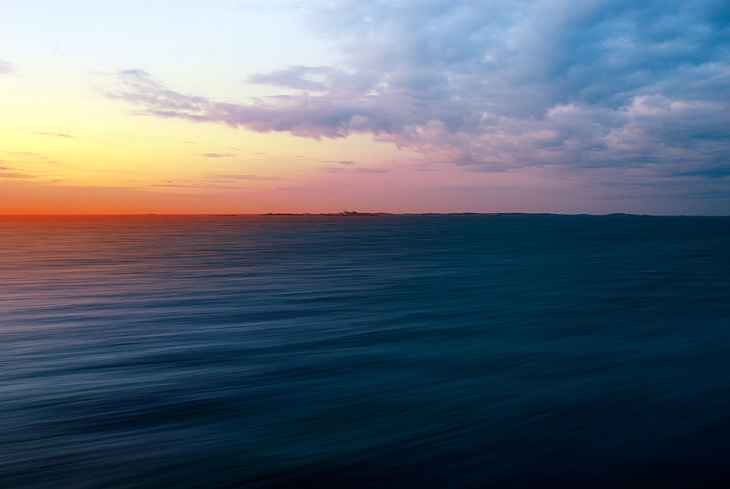
Waves in Motion


Sunrise Over Baltic Sea September 2008.

RAW/HDR


May 2005 (shot with Pentax *ist DS camera (6mp CCD)


Colors for Novermber. Shooting RAW - at least one stop flexibility, two with good CMOS sensor :)

Tuesday, November 18, 2008

E


III

All three recent photos - City Session November 2008

E


II

Enel


I

Dog Frog


Would you line to invent headline for this?

Tears of fear?
Pearls of tears?
Dot spots?
Hot shots?
Not shot hot knocks?

November Sessions 2008.

Browsing back the blog for a second I find November tends to be blog wise pretty productive..

Still Life


The Sky Moves Sideways.

November Sessions 2008

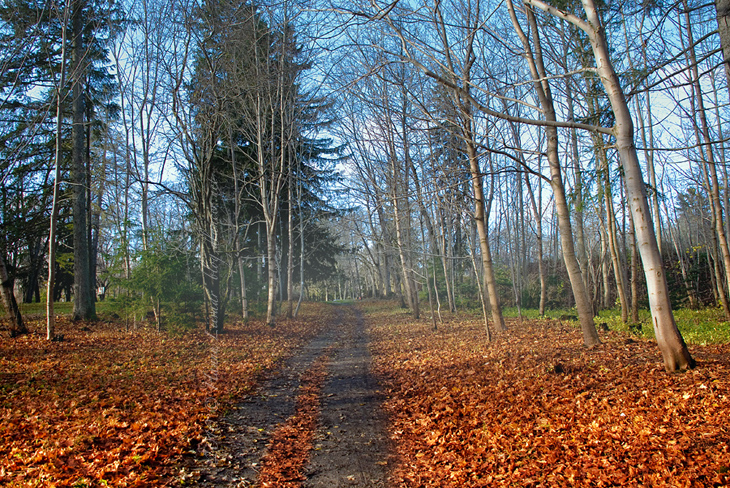
Fall


Finding colors from late autumn.

November Sessions 2008

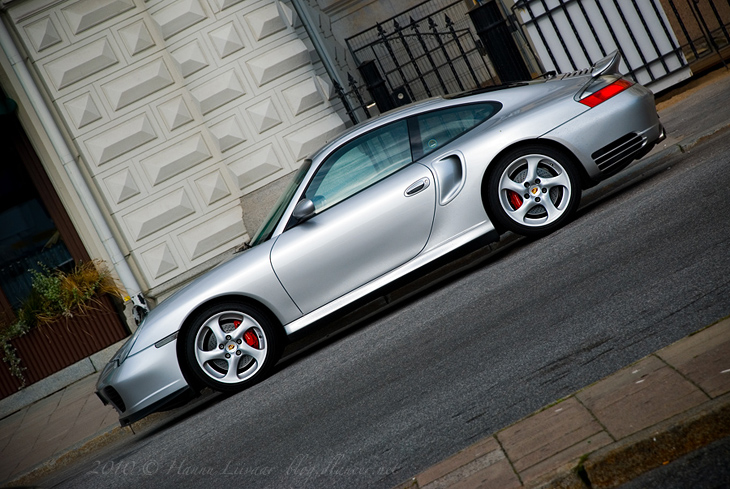
Porsche - For Big Boys Only


For diversity, one nice car, too. Can't imagine is it from 911 series or is it something newer.. maybe cayman? :) Good old times they just used to be Carreras.

Stockholm Sessions 2008